
Same-Day Delivery Services in India: Which One Fits Your Business Model (2026)
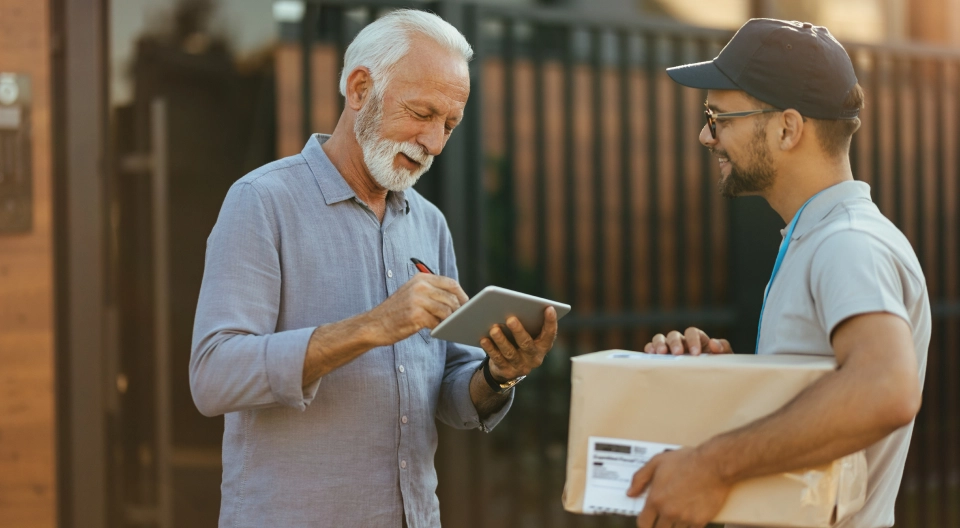
Same-day delivery is no longer a premium feature.
For most businesses in 2026, it directly impacts customer experience, repeat purchases, and operational efficiency.
What has changed is not just speed. It is how delivery is structured.
Some businesses need 4-hour delivery within a city.
Others need same-day across cities using air cargo.
Some need cost control more than speed.
Choosing the right model is where most brands get it wrong.
What same-day delivery actually looks like in 2026
Same-day delivery is no longer one format.
It operates across three layers:
- Hyperlocal delivery
2 to 6 hours within the same city - Intra-city express
4 to 12 hours using optimized routing - Inter-city same-day
Pickup → airport → destination → last-mile delivery
This is where systems powered by
AI logistics systems
are driving real-time decisions on routes and delivery modes.

How Indian businesses are structuring same-day delivery
Same-day delivery is used differently across industries.
D2C brands
Most D2C brands combine speed and cost efficiency:
- Air cargo for long-distance urgent orders using
Domestic Air Cargo Services - Last-mile execution using
Local Courier Services
For example, brands operating in metros often rely on city-level networks like:
- Local Courier Service Mumbai
- Local Courier Service Pune
This allows faster deliveries without increasing logistics costs.
Manufacturers
For manufacturers, same-day delivery is used selectively:
- Spare parts shipped via air
- Faster servicing and reduced downtime
In such cases,
Domestic Air Cargo Services
becomes a critical operational layer.
E-commerce brands
E-commerce brands typically split delivery based on urgency:
- Priority orders → same-day or air
- Standard orders → surface
This aligns with strategies explained in ecommerce delivery strategy to boost profitability
Same-Day Delivery Providers in India (2026 Comparison)
| Provider | Strength | Speed Type | Best For |
| Blue Dart | Air network and reliability | Inter-city same-day | High-value shipments |
| Delhivery | Scale and tech infrastructure | Next-day and limited SDD | Large D2C brands |
| Bombax | Speed, control, and execution | 4-hour and same-day | MSMEs, D2C, urgent deliveries |
| Shadowfax | Hyperlocal and flexible fleet | Sub-2 hour delivery | Food, pharma, quick commerce |
With major providers like Blue Dart increasing prices by 9 to 12 percent in 2026, cost efficiency has become a key deciding factor for growing businesses.
Disclaimer
This comparison is based on publicly available information, service positioning, and common use cases in 2026. Actual performance may vary based on location, shipment type, and volume agreements.
Why Bombax is emerging as a strong choice
Most logistics providers optimize for either scale or speed.
Bombax focuses on execution, control, and reliability.
1. SOP-driven shipment handling
- Open condition checks
- Packaging validation
- Fraud prevention
This is important in India where RTO rates can reach 20 to 40 percent.
It also connects with practices explained in how to reduce RTO in ecommerce
2. Control tower and OTP-based delivery
- OTP-based delivery confirmation
- GPS tracking
- Real-time alerts
This reduces losses in both forward and reverse logistics.
It supports transparency similar to what is discussed in transparent tracking and customer trust
3. Faster execution without premium pricing
By combining
Domestic Air Cargo Services
with strong last-mile execution through
Local Courier Services
businesses get:
- Faster deliveries
- Controlled logistics costs
4. Built for MSMEs and growing brands
The model is not limited to enterprise-level shipping.
It is designed for:
- Growing D2C brands
- High-value shipments
- Businesses scaling across cities
It also integrates well with
Surface Courier Services
for non-urgent deliveries.
With increasing EV adoption and the push toward green logistics in India, delivery networks are also shifting toward more energy-efficient last-mile operations.

What most businesses get wrong
Common mistakes include:
- Choosing the cheapest option instead of the right fit
- Using the same delivery model for all shipments
- Ignoring last-mile execution quality
- Not balancing air, surface, and local delivery
These issues often lead to higher RTO, delays, and poor customer experience.
Where logistics is heading next
Same-day delivery is becoming smarter, not just faster.
AI-led decision systems
Systems are increasingly able to:
- Automatically select shipping modes
- Optimize routes in real time
- Reduce delivery costs
Unified logistics systems
Businesses are moving toward connected systems where:
Order → dispatch → delivery → returns
are managed through a single framework.
Multimodal delivery networks
The future is not about choosing one mode.
It is about combining:
- Surface Courier Services
- Local Courier Services
- Domestic Air Cargo Services
into a single, optimized delivery system.
Choosing the right same-day delivery setup
There is no single best same-day delivery service.
There is only what fits your business model.
- High-value shipments need control and verification
- D2C brands need speed with cost balance
- City-focused businesses need hyperlocal execution
- Scaling brands need a mix of air, surface, and last-mile
The mistake most businesses make is using one model for everything.
That is where delays and losses begin.
The better approach is to use the right delivery mode for each shipment.
If your logistics setup matches your business model, delivery becomes a growth driver instead of a cost center.
Want to structure your delivery better?
Explore how Bombax logistics solutions can help you build a faster and more reliable delivery system. You can also explore more strategies on our blogs sections
Frequently Asked Questions
1. What is same-day delivery in logistics?
Same-day delivery means pickup and delivery happen within the same day, either within a city or across cities using air cargo and last-mile networks.
2. How do businesses choose between air, surface, and local delivery?
It depends on urgency and distance.
- Urgent → Domestic Air Cargo Services
- Non-urgent → Surface Courier Services
- Same-city → Local Courier Services
3. Is same-day delivery expensive in India?
It costs more than standard shipping, but using it only for priority orders helps control overall logistics costs.
4. Which businesses benefit most from same-day delivery?
D2C brands, e-commerce, manufacturers, and IT companies benefit the most due to speed and customer expectations.
5. How can businesses reduce failures in same-day delivery?
Use OTP-based delivery, real-time tracking, and proper packaging checks to reduce RTO and delivery failures.